They Don't Follow Each Other Anymore: How Fans Are Cracking Hollywood Drama Through Instagram
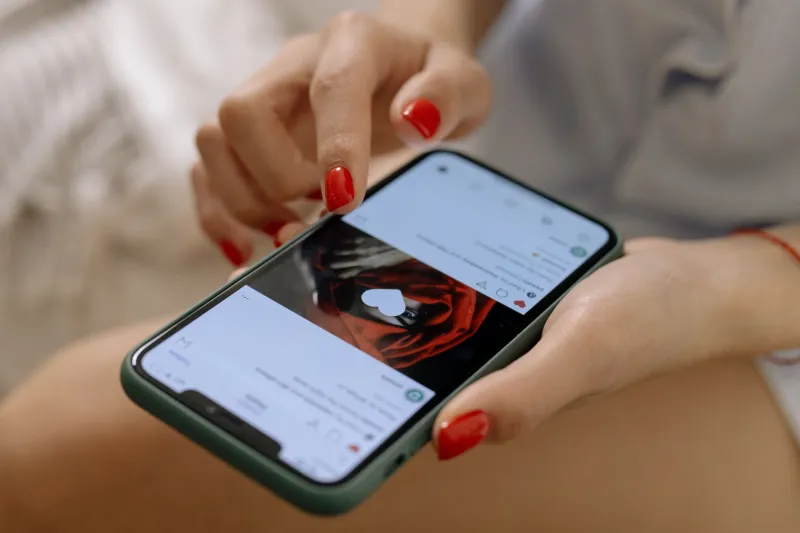
It starts with something tiny. A fan scrolling through Instagram notices that two co-stars who used to constantly comment heart emojis on each other's posts have gone completely silent. Then someone checks the follower lists. Then someone else pulls up archive screenshots from six months ago. Within hours, a thread is born, a Reddit post gets 4,000 upvotes, and the internet has reached a verdict: something happened.
Welcome to the world of social media tea-leaf reading — the unofficial hobby of thousands of fans who've decided that celebrity Instagram activity tells a more honest story than any PR statement ever will.
The Follow/Unfollow Economy
In the pre-social media era, the only way to know about behind-the-scenes drama was through gossip columns, leaked blind items, or the occasional tell-all interview. Celebrities controlled their narratives almost completely. If a cast had beef, you'd never know unless someone decided to talk.
Now there's a whole parallel layer of communication happening in public, whether celebrities intend it or not. Who follows who. Who likes whose posts. Who shows up in whose Stories. Who conspicuously fails to congratulate a castmate on a major career moment. These are all signals — and fan communities have gotten remarkably skilled at reading them.
The unfollow is the nuclear option. When two people who were publicly close on social media suddenly no longer follow each other, that's not usually an accident. Celebrities manage their online presence carefully. An unfollow is a choice. And fans know it.
The Amateur Detective Community
There are entire Reddit threads, Discord servers, and TikTok accounts dedicated to tracking these social dynamics. Some of them are surprisingly rigorous. Users will compile side-by-side screenshots documenting a shift in engagement over time — showing exactly when the likes stopped, when the comments dried up, when a cast member stopped tagging their co-star in press tour content.
Is it a little obsessive? Sure. But it's also genuinely fascinating as a social phenomenon. These fan communities are essentially doing a form of behavioral analysis, and they're often more accurate than you'd expect.
The key insight driving all of this is that authenticity leaks through. Celebrities can post a perfectly crafted joint statement saying everything is fine. They can smile at award shows. But if they're not following each other on Instagram and haven't interacted publicly in eight months, the fans are going to notice — and they're going to talk about it.
Case Patterns: What Fans Actually Look For
So what are the actual signals that get flagged? A few patterns come up again and again in these communities.
The strategic silence. When a major cast announcement or milestone happens and one specific cast member doesn't acknowledge it — while everyone else does — that absence screams louder than any comment. Fans catalog these omissions meticulously.
The archive purge. Deleting old photos with a specific person is a classic tell. Sometimes it's mutual. Sometimes only one person cleans house, which creates its own kind of drama.
The like pattern shift. This one requires real dedication to track, but some fans do it. They'll notice that a co-star who used to like literally every post from a castmate has gone from liking everything to liking nothing — or worse, started liking posts from a known third party who may be connected to some off-screen conflict.
The press tour energy. Interview body language and seating arrangements get analyzed, but the social media behavior during press tours is just as telling. Who's posting group photos, who's cropping who out, who's mysteriously absent from the behind-the-scenes content.
When the Fans Are Right
Here's the thing: sometimes these communities actually get it right. Not just sort-of right — actually, accurately right, months before any official confirmation.
There have been multiple high-profile situations where fan sleuths pieced together a genuine rift between co-stars purely from social media breadcrumbs, only for the drama to be confirmed later through interviews, sources, or the stars themselves eventually addressing it. The detective work holds up.
This has created a weird feedback loop where celebrities are now acutely aware that their social media behavior is being analyzed at this level. Some have responded by becoming more deliberately opaque — posting less, engaging less, keeping things professional and neutral. Others have leaned into it, using strategic likes and follows almost like a communication tool.
When the Fans Are Wrong (And It Gets Messy)
Of course, the flip side is that fan communities also get it spectacularly wrong sometimes. Two actors who simply don't use Instagram much get branded as feuding. Someone who unfollowed a co-star turns out to have just done a general account purge. A lack of congratulatory posts gets read as shade when the person was just, you know, busy.
The consequences of these misreads aren't always trivial. False narratives spread fast, and even after corrections, the original rumor tends to stick around longer. Celebrities have had to directly address feuds that existed entirely in fan imagination — which is a weird and uncomfortable position to be in.
There's also a line that gets crossed sometimes between fan detective work and genuine harassment. When communities start pressuring celebrities to publicly clarify their relationships, or when the speculation bleeds into real-life targeting, what started as harmless gossip becomes something more problematic.
The New PR Reality
All of this has fundamentally changed how celebrity teams think about social media management. Publicists now have to factor in the follow/unfollow calculus when advising clients. A strategic unfollow can send a message. An unexpected follow can generate positive press. The platform has become a communication channel even when nobody's saying anything out loud.
Some celebrities have started using this to their advantage — dropping subtle hints, generating buzz, or quietly signaling things they can't say directly. It's a strange new layer of celebrity communication that didn't exist fifteen years ago.
For fans, it's turned the act of scrolling through Instagram into something closer to reading a novel with unreliable narrators. Every post, every like, every conspicuous absence is a potential plot point. The story is always ongoing, always incomplete, and always up for interpretation.
And honestly? For a lot of people in these communities, that's half the fun. You don't need a source inside the production. You just need to notice who stopped following who — and trust that the internet will do the rest.