Sorry Doesn't Cut It Anymore: Why Celebrity Apologies Keep Making Everything Worse
Photo: celebrity phone social media followers dropping public statement controversy, via static.businessinsider.com
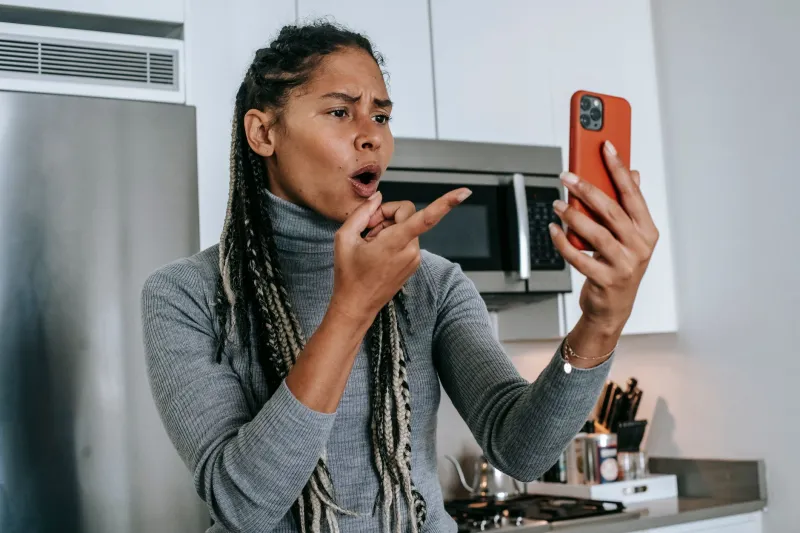
There is a genre of content that lives rent-free in the collective brain of the internet, and it goes something like this: celebrity does something controversial, sits down in front of a ring light with no makeup and a soft filter, speaks directly to camera in a quiet, measured voice, says some version of "I hear you" and "I've been doing the work" — and then watches their follower count crater in real time.
It happens so regularly now that it's basically a format. And the weird thing is that the apologies keep getting more polished, more carefully worded, more strategically timed — and they keep failing anyway. Sometimes they fail harder than the original incident.
So what's actually going on?
The Apology Industrial Complex
At some point in the last decade, celebrity crisis management became a full industry. There are PR firms that specialize specifically in social media damage control. There are consultants who will tell you exactly what to say, how to say it, what lighting to use, and how many days to wait before posting. The result is a class of apologies that are technically correct and emotionally hollow — and audiences have become extraordinarily good at detecting the difference.
When a statement feels workshopped, people react to the workshopping. When an apology hits all the right talking points in the right order — acknowledgment, accountability, commitment to growth — without any of the messiness of an actual human being genuinely grappling with something they did wrong, it reads as performance. And performing contrition in front of an audience that already doesn't trust you is a fast track to making things significantly worse.
The internet is not forgiving of inauthenticity. It might be forgiving of flawed sincerity. But it will absolutely demolish a polished non-apology dressed up as a heartfelt moment.
Speed vs. Thoughtfulness: The Impossible Timeline
Here's the bind that celebrities and their teams are in: respond too fast and it looks reactive and unthoughtful. Wait too long and the narrative has already solidified, the takes have already hardened, and anything you say will be read as damage control rather than genuine reflection.
There is no universally correct timeline. But there are patterns worth looking at.
Apologies that come within hours of an incident tend to read as panic. They often contain factual errors or walk back things that probably shouldn't be walked back, which then requires a second apology — and the second apology almost always performs worse than the first.
Apologies that come weeks later, after extensive silence, tend to land in a landscape where audiences have already made up their minds. The statement becomes a referendum on whether the wait was worth it, rather than on what the statement actually says.
The sweet spot — if one exists — seems to be somewhere around 48 to 72 hours: enough time to actually think, not enough time for the story to fully calcify. But even that window isn't a guarantee of anything.
What Audiences Actually Want (And Can't Always Articulate)
Here's the honest truth about what's changed: audiences don't just want an apology anymore. They want evidence of understanding. And those are very different things.
Saying "I'm sorry if anyone was hurt" is not evidence of understanding. It's the linguistic equivalent of a shrug. Saying "I understand why what I did was harmful because X, and here's how it connects to a larger pattern of Y" is much closer to what actually lands — but it also requires a level of public self-analysis that most people, celebrity or not, are genuinely uncomfortable performing.
There's also a trust deficit that no single statement can fix. For celebrities who have had multiple controversies, or who have a history of saying one thing and doing another, the apology arrives pre-poisoned. Audiences aren't reading it fresh — they're reading it through the lens of everything that came before. A perfectly crafted statement from someone with a credibility problem is still a statement from someone with a credibility problem.
The Apologies That Actually Worked
They exist, though they're rarer than the failures. What do they tend to have in common?
First, they're specific. Not "I said some things that came across wrong" but "I said this specific thing, and here's why it was wrong." Specificity signals that the person actually understood what they did, rather than responding to the general vibe of being in trouble.
Second, they don't ask for anything. The worst apologies contain some version of a request — for forgiveness, for privacy, for people to "move on." Asking your audience to do emotional labor for you in the middle of an apology is a remarkable miscalculation. The apologies that land best are the ones that make no demands at all.
Third, and maybe most importantly, they're followed by visible behavior change. A statement is just words. What people are actually watching for — sometimes for months or years — is whether the behavior matches the language. The celebrities who have genuinely recovered from public controversies are almost always the ones where the apology was just the beginning of a longer, quieter process of demonstrating change.
The Unfollow as Verdict
There's something worth noting about how social media has changed the mechanics of public accountability. The unfollow is a vote. It doesn't require a comment or a callout post — it's a quiet, invisible signal that somebody has decided they're done. And when those signals aggregate into a visible follower count drop, they become a public verdict that the algorithm amplifies.
This is part of why apologies can accelerate cancellation rather than slow it. The statement draws attention back to the controversy. People who hadn't seen the original incident see the apology, go looking for context, and make their own judgment. The reach of the apology often exceeds the reach of the original incident — which means a bad apology can introduce the problem to an entirely new audience.
It's a brutal dynamic. And it's probably not going away.
The Bottom Line
Public apologies have become one of the hardest things a celebrity can do well — not because the bar is impossibly high, but because the bar has fundamentally changed. Audiences in 2025 are not looking for remorse. They're looking for comprehension. They want to know that the person on the other side of the screen actually gets it, not just that they've been told to say they do.
The celebrities who figure that out — who find a way to be genuinely, messily, imperfectly accountable rather than performing accountability — tend to come through. The ones who keep outsourcing their contrition to a PR team tend to find out the hard way that the internet can tell the difference.