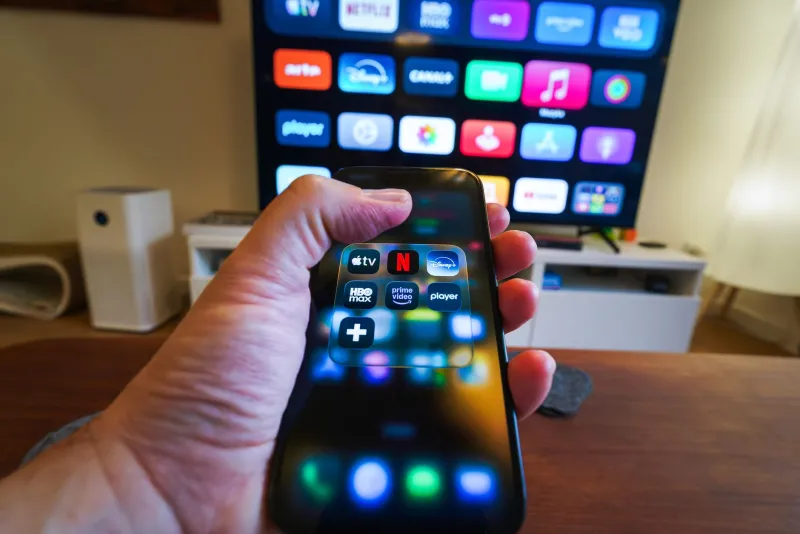
Your Streaming Queue Is a Confessional Booth and Netflix Already Knows Everything

You curate your Instagram. You pick your words carefully on Twitter. You tell your coworkers you spent the weekend "catching up on some documentaries." But your streaming queue? That thing is a full-blown tell-all memoir, and it's been writing itself for years without your permission.
The algorithm doesn't care about your self-image. It cares about what you actually clicked on at 11:47 on a Tuesday.
The Machine That Learned You Without Asking
Streaming platforms have spent years quietly building a picture of you that would make your therapist jealous. Every hover, every pause, every time you started an episode and bailed 12 minutes in — all of it is data. Netflix, Hulu, Max, and the rest aren't just tracking what you finish. They're tracking what you almost watched, what you rewatched, and what you added to your list and then ignored for six months like a gym membership.
The result is a recommendation engine that, for a lot of people, feels uncomfortably accurate. You didn't tell anyone you were going through a rough patch last winter, but somehow the platform kept surfacing comfort food shows — familiar sitcoms, low-stakes cooking competitions, anything with a warm color palette and no real consequences. It wasn't magic. It was pattern recognition. And the pattern was you.
Psychologists who study media consumption point out that our entertainment choices are rarely random. We reach for certain genres when we're anxious, others when we're bored, and completely different ones when we're feeling nostalgic or sad. The algorithm doesn't know why you're watching what you're watching, but it knows that you're watching it, and it adapts accordingly.
The Uncanny Valley of "Recommended for You"
Here's where it gets a little weird. Most people have had the experience of opening a streaming app and feeling like it read their mind. The show at the top of the page is exactly what you were in the mood for, even though you hadn't consciously thought about it yet. That moment is genuinely unsettling for a lot of us — not because it's wrong, but because it's right.
There's a term researchers use: the "creepiness threshold." It's the point at which personalization stops feeling helpful and starts feeling invasive. Streaming platforms dance right along that line. When an algorithm surfaces a true crime docuseries the week after you've been stress-watching crime procedurals, it feels like the app is watching you watch it. Which, in a very real data-collection sense, it is.
But most of us don't actually log off. We watch the docuseries. Because the recommendation was good.
What Your History Says About You (Whether You Like It or Not)
Think about the last month of your viewing history as an honest document. Not the shows you told people you were watching — the ones you actually watched. The guilty pleasures, the nostalgic revisits, the weird niche documentary you found at 1 a.m. and watched three episodes of before coming back to reality.
That list is, arguably, more revealing than most things you'd voluntarily share about yourself. The genres you gravitate toward when stressed, the actors whose projects you'll follow no matter what, the types of endings you need — redemptive, ambiguous, or devastating — all of it builds a surprisingly detailed psychological profile.
Some streaming platforms have started leaning into this explicitly. Spotify figured out years ago that people love being shown a data portrait of themselves, which is why Wrapped became a cultural event. Netflix has experimented with similar year-in-review features, and the response is always the same mix of amusement and mild horror. "Okay but how did it know," people post, alongside screenshots of their most-watched genres.
The answer is: it knew because you told it, one click at a time.
The Identity Shift Nobody Talks About
Here's something worth sitting with: your streaming history is also a timeline of who you've been. Go back far enough and you'll find the shows you watched during a breakup, during a job change, during a move to a new city. The algorithm doesn't frame it that way, but the record is there.
This is part of why recommendation engines can feel oddly emotional. When a platform resurfaces something you watched five years ago — a show tied to a specific chapter of your life — it's not just suggesting content. It's accidentally touching a memory. People talk about this in forums and comment sections all the time: "I can't rewatch that show because of where I was when I first saw it." The algorithm doesn't know that. But you do.
There's also the question of how our queues shape identity going forward. If the algorithm keeps feeding you a certain type of content because that's what your history suggests you like, does it eventually narrow the range of what you explore? Some critics of recommendation culture argue that we're all slowly being sorted into tighter and tighter entertainment bubbles — not just politically, but aesthetically and emotionally too.
Comfort or Surveillance? Probably Both
The honest answer to "is the algorithm a good thing" is: it depends on what you want from it. As a tool for finding your next favorite show without scrolling for 45 minutes, it's genuinely useful. As an accurate mirror of your emotional state and personality, it's fascinating and a little uncomfortable. As a commercial system designed to keep you on the platform as long as possible, it's worth being clear-eyed about.
None of that means you should feel weird about your watch history. Everybody has the comfort rewatch shows. Everybody has the guilty pleasure they don't mention. The algorithm already knows, and it's not judging you.
It's just taking notes.